Friday, November 22, 2013

Stories


“If you don’t read or know stories then you will be accepting a lot of lies” –Brian Doyle

Last Friday I had the privilege of attending a Brian Doyle reading on campus at Brigham Young University.  Brian Doyle is an award-winning writer and editor of the University of Portland’s magazine, Portland.  I have never attended a reading before and I was pleasantly surprised how insightful it was to listen to Doyle read and discuss the inspiration behind his works. 

“Stories are important”, “stories, stories, stories”, “if someone tells you a story your job is to write it down and share it.”  If there is one thing I learned from Brian Doyle, it’s the importance of stories.  And the more I think about it, the more I agree with him.  Whether we realize it or not, stories affect every aspect of our lives.  The books we read and the movies we watch are nothing but stories.  History in all its forms, including our own personal histories, are full of stories; some good, some bad.  Stories of courage, perseverance, and achievement and stories of disappointment, fear, and failure.  Every story we have ever heard has had an impact on our lives, good or bad.  It’s these stories that shape us into better people by providing role models or inspiring us to join a certain cause. 

One story that I have loved since childhood is the Harry Potter Series.  There is just something in the story that brings me back and makes me read it again.  Although fictional stories such as the Harry Potter can have a huge effect on us, the stories that really matter are the ones that are real.  Real-life adventures and tragedies with real-life people, those are the stories that have the ability to truly change us.  But, unfortunately, those are the ones that are left on the bookshelf where only dust can enjoy their contents. 

Sunday, November 3, 2013

"Left to Tell" Book Review


Looking for a good book to read?  I highly recommend "Left to Tell: Discovering God Amidst the Rwandan Holocaust" by Immaculee Ilibagiza.  Immaculee was a young university student in 1994 when the Hutu government in Rwanda began slaughtering the Tutsi minority in the country.  Because she was Tutsi, Immaculee was forced to go into hiding or be killed.  This book tells the amazing true story of how she survived and dealt with the heartbreak that followed. 
I loved this book!  I've read multiple books about people's experiences from the Holocaust in Germany and other similar tragedies but I'd never really felt the emotion behind them until I read Immaculee's story.  The sheer horror of the events that took place were almost overwhelming. 
The book was a huge eye-opener for me because I had never heard about the Rwandan genocide; Immaculee Ilibagiza does a very good job of weaving the history behind the genocide and her personal story together.  I was asked to read the book for a class so at first I was a little skeptical because most books professors ask you to read are informative but not at all interesting.  This book is definitely and exception to that rule, I couldn’t put it down!

Immaculee Ilibagiza has become one of my heroes after reading this book.  I don’t know how she found the strength to forgive the people who killed her family but it inspired me to be more forgiving of those who have wronged me.  If Immaculee can find it in her heart to forgive then I certainly can.  I know some people aren’t religious but I am and this book definitely increased my faith in God.  Through her faith, Immaculee was able to make something good come out of a horrible situation. 

I would recommend this book to anyone, religious or not.  Not only is it a huge eye-opener about what happened in Rwanda in 1994 but I also believe that you could learn a lot about life from it.  Forgiveness and hope are not purely Christian virtues but can offer peace and comfort to anyone who needs it.  The book raises a lot of questions about humanity and how people can do such horrible and senseless things but it also offers a plan for a brighter future.   

Saturday, November 2, 2013

Final Salgado Post


For my last Salgado photo post, I chose a picture of three women walking through the Lar do Cangalo refugee camp with pots of water on their heads.  It’s a seemingly normal photograph, except for one thing.  All of the women are walking on their knees, each of them having lost at least one leg in a landmine explosion.  These women are “misplaced persons” from Angola, they aren’t officially considered refugees because they haven’t left their home country.  This lesser status certainly doesn’t do justice to all that they have endured.  For one thing, the countless number of landmines that were placed throughout the country have left thousands of people crippled and in desperate need of help. 

Yet despite all of these hardships, the human spirit finds a way to carry on.  That’s the message that I took from this picture, you have to carry on no matter what.  Salgado’s photographs don’t just expose the plights of refugees, it shows us how strong the human spirit is and how much it can endure.  Humans are a deeply flawed species and there are so many horrible mistakes that we have made.  But there is hope for our future, if we just push forward with loving hearts and open minds. 

Sources:
Salgado, Sebastiao. Migrations. pg. 226 Paris: AMAZONAS, 2000.

Friday, October 25, 2013

Graveyard


The photograph that I decided to use for this week’s blogpost was taken inside a schoolhouse in Rwanda.  But instead of being filled with desks, paper, and students this schoolhouse is full of dead bodies.  The shutters have been ripped from the windows and skulls litter the floor.  These people were victims of the awful genocide that took place in Rwanda in 1994.  What happened in Rwanda is one of countless examples of when man has taken upon himself the role of God and decided who should live and who should die. 

One thing that must be understood about genocide is that there is no clear line between what groups live and what groups die.  It may seem like there is, but there isn’t.  Hitler didn’t just have the Jews killed, he also killed homosexuals, gypsies, the handicapped, and the educated.  In the Rwandan genocide Tutsis weren’t the only ones killed, any “moderate” Hutu that spoke out against what was happening was also killed.  This realization certainly sheds a lot more light on the nature of situations like this and the people that initiate it.  I can think of only one word to describe them: evil.  Evil does not obey the laws of reason or justice.  It has no rules, no boundaries, and it needs only the slightest motive to unleash the most terrible of punishments. 

Source:

Salgado, Sebastiao. Migrations. pg. 206 Paris: AMAZONAS, 2000.


Tuesday, October 22, 2013

Through Mists of Darkness


On April 6, 1994, genocide broke out in Rwanda.  The extremist Hutu population unleashed terror on their Tutsi neighbors, killing almost a million people in just four months.    If you were Tutsi, or even a moderate Hutu, you were forced to either hide, run, or be killed. 

On pages 168 and 169 of Salgado’s book there is a picture of a huge mass of people walking through a very thick fog.  They are native Rwandans fleeing to Tanzania to escape the evil that has taken hold in their home country.  The darkness and thickness of the fog adds emphasis to the unknown that lies ahead of them.  It is survival only that leads them into the darkness, and the hope that they will be able to rebuild their broken lives when they reach the other side. 

And what does the fog mean to us, the observers of these horrors?  I was born in December of 1994, just a few months after the genocide in Rwanda took place.  And yet, I had never even heard of it until I read a book about it this semester.  It is absolutely appalling, what happened in Rwanda, but to me it is just as appalling that I have never learned about it in school.  The world is still up in arms over Hitler’s atrocities, as we should be, but what about the suffering people in the rest of the world?  We have a responsibility to help them, but we can only do that after the fog has been lifted; in other words, after we learn their stories and hear their cries.

Source:

Salgado, Sebastiao. Migrations. Paris: AMAZONAS, 2000.

Friday, October 11, 2013

Last Man Standing


An old man sits on a bed of grass, his knees pulled into his chest.  He looks sad and perhaps thoughtful.  He may be thinking, “why me?  My sons, my brothers, they are all dead”.  He is the last man standing, “The younger men were murdered or fled before they were caught in the war”, Salgado writes.  Countless numbers of men, slaughtered.  Why?  For what purpose?  Probably for money, power, glory, whatever the people in power are seeking to obtain.  But is it really worth all those lives?  What is it that makes humans so cruel that they would drive countless numbers of people from their homes and slaughter the ones that were too slow to escape?  I don’t think I will ever understand the minds of dictators.  I’m not sure they have minds at all!  Their actions and words are mindless and unfeeling.

But in the end it doesn’t matter what the dictators do, it matters what we do.  If we do nothing, then the dictators continue their mindless rampages unchallenged.  But if we can somehow spread the message about what these horrible people do then we are one step closer to ending their reigns of terror.  The question is not about the existence of a war, but who will be the last man standing. 

Source:
Salgado, Sebastiao. Migrations. pg 128 Paris: AMAZONAS, 2000.


Saturday, October 5, 2013

Perception


Today I want to discuss a topic that is very sensitive to a lot of people.  I want to talk about how we as a society view and treat people with special needs, particularly those with ASD or Autism Spectrum Disorder.  So of course this is where I go into a “stop bullying kids who are different” rant right?  Actually no, I want to argue this from a different perspective today.  I think that we as a society, especially as youth, have been trained to think that those who struggle mentally or socially have less potential than the rest of us.  I would argue that it is this viewpoint, not the disability itself, which prevents these kids from reaching their full potential.  My younger brother is autistic and my mother is an I.E.P. coach, I understand in a very real way the sensitivity of topics like this and I have tried my very best to maintain that sensitivity while also saying those things that I think need to be said. 

Nobody is perfect, you don’t have to be Albert Einstein to figure that one out.  We all have something that is “wrong” with us.  Me for example, I’m a dancer but I was born with naturally tight hips.  Long story short, I can’t do the middle splits; I’ve stretched almost every night for four years and gone to physical therapy but I still can’t do my middle splits.  My point in telling you this is to illustrate that everyone has a “disability”, if you will, some peoples’ just manifest themselves more plainly than others.  So why is it that when we meet someone with an obvious disability we treat them like they don’t have the same potential that we as “normal people” have?  It could be because we don’t fully understand those people that we encounter and that’s not necessarily a bad thing.  My little brother is autistic and I don’t always know what to say or how best to interact with him.  But I do know that he is very smart and very talented, he just sees the world from a different perspective.   

I want to introduce you to a very inspiring person to help prove my point.  Her name is Temple Grandin.  Grandin was diagnosed with Autism at the age of two.  Autism is a brain disorder that is characterized by a delayed ability to speak, difficulty communicating ideas, and awkwardness in social situations.  As a result of her autism Temple didn’t begin speaking until she was four years old and she was teased all throughout middle school and high school.  But Grandin has never let this disability hold her back.  She now has a bachelors degree in psychology, a masters and a doctorate degree in animal science, and has been awarded multiple honorary degrees.  She works with a number of fast-food chains and slaughterhouses, consulting them on the most humane way to treat their animals.  Dr. Grandin is also a leading autism advocate; in fact she credits her success as an animal scientist to her autism. 

Dr. Grandin has written multiple books about autism, especially on how she has dealt with it in her own life.  When asked she says that her main concern for kids that have been diagnosed with the disorder is that they aren’t being pushed hard enough.  Among other things she says that they need to learn how to order food, shop for groceries, take turns, and other basic skills.  She talks about how her mother taught her how to work from a very early age, getting her a sewing job at the age of thirteen.  I agree wholeheartedly with Temple, these kids need to know how to work and work hard because they do have the capacity to be self-sufficient.  But for too many people in this society the label of a disorder is like a free pass; they aren’t expected to follow rules or finish their homework because “they don’t understand.”  I would argue that it is our responsibility to help them understand, help them learn and grow; interact with them so that they feel more comfortable in social situations.  I also believe that in school they should be kept with their normal classes as much as possible, not just for the child’s benefit, but to send a message to the rest of the kids that they are capable of all the same things that “normal” kids are.  Because perception is everything in the world of disabilities. 

The title of one of Dr. Grandin’s books is “Different, Not Less”.  This doesn’t just apply to kids on the autism spectrum but to anybody with any kind of disability.  Just because something is “wrong” with a person doesn’t mean that they belong to a lower class of people.  Some of the most successful people in this world have had some sort of disability.  For example, it is believed that Albert Einstein may have had autism because he didn’t begin speaking until he was three years old.  Mozart is also speculated to have had autism.  Chris Burke, who played Charles “Corky” Thatcher in the ABC series “Life Goes On” has down syndrome.  And to those that don’t think that’s a very big deal I would ask, “How many famous actors do you know?”  All of these people are inspiring to me because they give me hope for my little brother, who is a very talented artist and one of the funniest kids around.  I hope that next time you meet someone who has special needs you will think a little bit differently.  They’re just different, not less.

Thursday, October 3, 2013

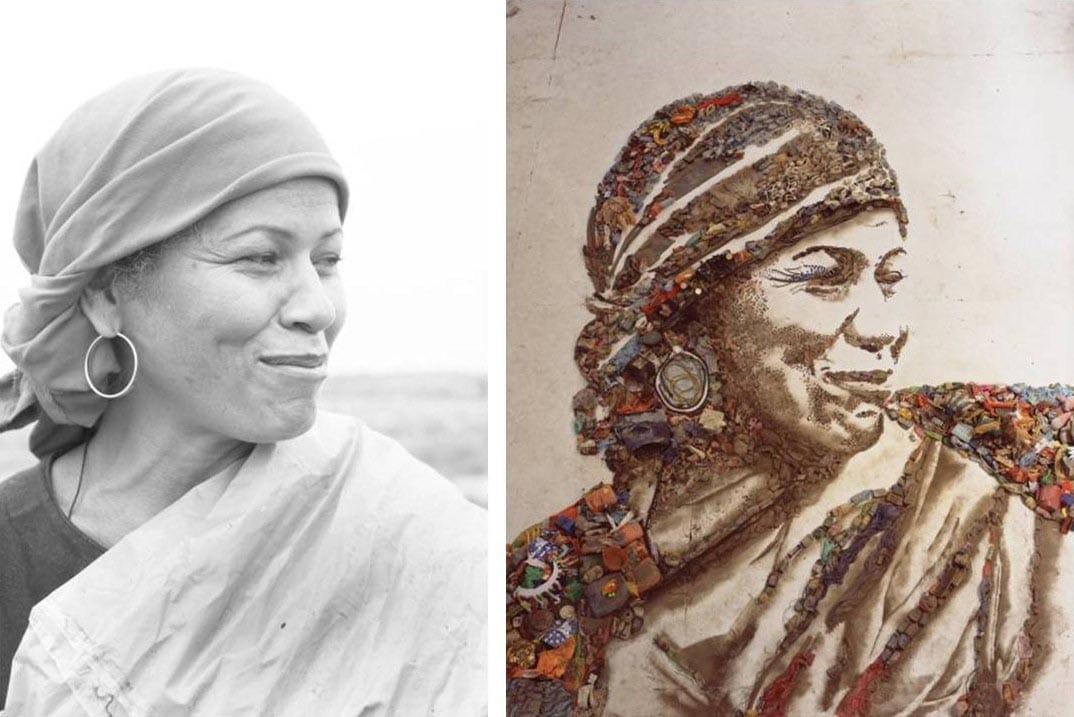
Waste Land


I have never understood modern art, it has never made any sense to me.  But after watching the documentary “Waste Land” I now have a new appreciation for what it can represent.  In this documentary artist Vik Moniz transformed the lives of the “catadores”(pickers of recyclable materials)  of the world’s largest landfill, Jarim Gramacho, by making them the objects of his artwork. 

For the first part of the documentary all I felt was shock at the conditions that these people  live in.  They are the poorest of the poor and most of them have experienced hardships in their lives that I even imagine.  For the most part they were all trying to be positive but there was a sadness and despair behind their eyes that they couldn’t hide.  But as Vik involved them in his work all that started to change.  Being a part of Vik’s project gave them an opportunity to feel important and needed, something that every human being wants to feel.  But this project didn’t just help them spiritually, it helped them physically.  All of the money from the sale of the artwork was given back to the catadores of Jarim Gramacho.  Although the landfill was closed in 2012, the resilient spirit of the catadores lives on through the ACAMJG(Association of Recycling Pickers of Jarim Gramacho) and the people that are a part of it. 

I was inspired by Vik Moniz in this documentary because he took a talent he already possessed and used it to help others.  His actions inspired me to try to find ways to use my talents to help others as well. 

I know I haven’t done much to describe the nature of the actual art created, but it is literally too beautiful to be put in words.  If you would like to know more about the documentary “Waste Land” you can watch the trailer here: http://wastelandmovie.com/index.html


Picture source:
http://www.boumbang.com/wp-content/uploads/2012/05/Vik-Muniz-27.jpg

Monday, September 30, 2013

Manufactured Landscapes


The documentary, “Manufactured Landscapes” is intended to examine industrialization and globalization through photographs and videos of landscapes.  Edward Burtynsky traveled to China and Bangladesh to gather photos and video for his book and this documentary.  It features various places where the landscape has been changed by industrialization and it describes various substandard living conditions endured by the people living in these places.  While I will say that I agreed with some of the films message, for the most part I didn’t like it and was not particularly affected by it. 

My first issue with the film was that Burtynsky used China as an example to describe the rest of the world.  While no country is perfect, China definitely ranks low on the list as far as human rights and environmental protection goes.  I can think of no other country in the world where you are only allowed to have one child and where hundreds of thousands of people are forced out of their homes so that the government can build a massive reservoir.  It seems to me that this documentary wanted to focus mainly on environmental concerns that the e-metal, oil, and coal industries are causing in China but to me the most important issue is that of human rights.  I’m not saying that I don’t pity the people of China and similar countries and wish to help them, I just think it’s a bit of a hyperbole to compare them to the rest of the world.

At one point in the film, Burtynsky argues that China’s huge, unethical, and inhumane oil industry is caused by world demand.  He basically says that China has the last of the oil reserves and that the country will be shoved back into poverty when that runs out.  This claim is just plain false, the United States has 2.3 trillion gallons of untapped oil just waiting to be used (Political Vel Craft). Perhaps we could help the people of China by creating our own energy, instead of depending so much on theirs. 

The last point I would like to make deals more with opinion than fact.  To me, the documentary was slow-moving and the point the director was trying to make seemed very vague.  At first I thought the main focus was on the environment, but then the rest of the documentary focused on people.  It took me most of the film to realize what the author’s main point was, a strategy which in this case I don’t think was very effective.  There was very little talking in the documentary, instead it was just landscapes, silence, and people working.  While this can be a very effective way to approach a topic to some people, it was not a very effective argument for me. 

I appreciate Edward Burynsky’s work as a photographer, his pictures truly are beautiful.  It wasn’t the pictures or the people I had a problem within “Manufactured Landscapes”, it was the argument he tried to make with the pictures.  I think if he presented the argument in a different way, even if it was the same argument, the message would resonate a lot better with audiences.
Sources:
Political Vel Craft. March 2011. 30 September 2013.


Thursday, September 26, 2013

The Faceless People


As I studied Salgado’s photographs this afternoon I stopped at a photo of two women whose faces were completely covered with a veil.  All women were forced to wear these veils when the Taliban took Kabul in 1995 (World Press).  They were also forbidden to leave their homes except to collect food and medicine.  These masks are just one example of the cruelty of dictators like the Taliban.

I chose this photograph because the masks have a symbolic meeting as well as a literal one.  Before Salgado came along all of these people in the photographs wore masks.  We knew they existed but we didn’t know who they were so they meant very little to us.  We hear about their sufferings in school, in the news, and in books but we are never driven to help.  Salgado’s photos give these people identities, it allows them to take off their masks.  Now we know who they are, will we still turn a blind eye?

Sources:
Salgado, Sebastiao. Migrations. pg 75. Paris: AMAZONAS, 2000.
World Press. Taliban Timeline. 2001. 23 September 2013.


Thursday, September 19, 2013

The Salgado Project


Sebastiao Salgado is a Brazilian photographer who has made it his mission to spread awareness and concern about the plight of refugees around the world.  Over the course of seven years Salgado traveled to more than thirty-five countries to photograph people who had been forced to flee from their homes because of war or instability in their home countries.  He compiled the photographs into a book called “Migrations” and it is on that book, or more importantly the pictures in it, that I will base a majority of my posts. 

As I flipped through the pages of Migrations I couldn’t help but notice how many children were featured in the photographs.  One child stands in the middle of a field of dirt, the abandoned train that him, his family, and fellow refugees call home can be seen in the distance behind him.  He is living in the Ivankovo camp in eastern Croatia.  I was struck by the realization of how hard being a refugee must be on these young children; forced to leave their home and everything they know because of forces beyond their control. 

But despite the cruelty of their situation I still saw joy in the faces of children in other photographs.  Another photo, taken in the Nahr el-Bared camp near Tripoli, shows two children that appear to be dancing for the camera.  I was reminded by this photograph of the extraordinary resiliency of children.  They can always find a way to have fun in any circumstance.  By finding the joy in their life they have forgiven anyone who has ever wronged them; including us, who have sat in ignorance of their situation for far too long. 

The world is far too big for us to be aware of every cruelty that goes on in it, but Salgado through his photographs has taken away our excuse to be totally unaware of it.  Salgado doesn’t offer a solution to the problems he sees in the world, his goal is simply awareness.  But awareness is the most important step in solving any problem.  My purpose in sharing this information with you is also to spread awareness about these horrific situations so that we as a society can take the next step in solving these overwhelming issues. 
 
Sources:  Salgado, Sebastiao. Migrations. Paris: AMAZONAS, 2000.


Sunday, September 15, 2013

God Grew Tired of Us


This semester in my writing class at BYU we are studying refugees.  As part of our coursework we were asked to watch the National Geographic film “God Grew Tired of Us”.  This is an award-winning film on the Lost Boys of Sudan; a group of boys who were forced to flee from their homes at a very young age because of the brutal civil war in their home country of Sudan.  Against all odds they made it to a refugee camp in Kakuma, Kenya where they were given food, education, and, most importantly, safety.  Out of the 25,000 lost boys, 3800 were selected to relocate to the United States; the film follows three of those boys, now young men, who were selected to relocate.

I was especially inspired by John Bul Dau who was given the chance to relocate to Syracuse, New York.  He now has a college degree, has founded two separate organizations to help his fellow “brothers” back in Kakuma, and has written a book about his life story.  John was inspiring to me because he had the opportunity to create a better life for himself and those he loved and he made the most of it, even though it was a daunting task.  It wasn’t easy for him, he often worked two jobs to earn more money, but he never gave up or forgot where he had come from and those he had left behind.  He was able to locate his mother and bring her and one of his sisters to live with him in America, so you could definitely say his hard work paid off. 

How many of us have the opportunity to help others and we don’t take it?  How many of us when we hear a cry for help don’t take it seriously?  The cry for help around the world is real and we need to answer it as best we can.  There are countless amounts of people that are struggling and in need of help and what are we doing to answer them?  That is definitely a personal question because there are countless ways to help but one thing that I learned from this film is that none of us are justified in doing nothing.  We need to all work hard, like John, to create a better world for everyone in it. 

To learn more about the Lost Boys or the film ‘God Grew Tired of Us’ visit: www.godgrewtiredofus.com